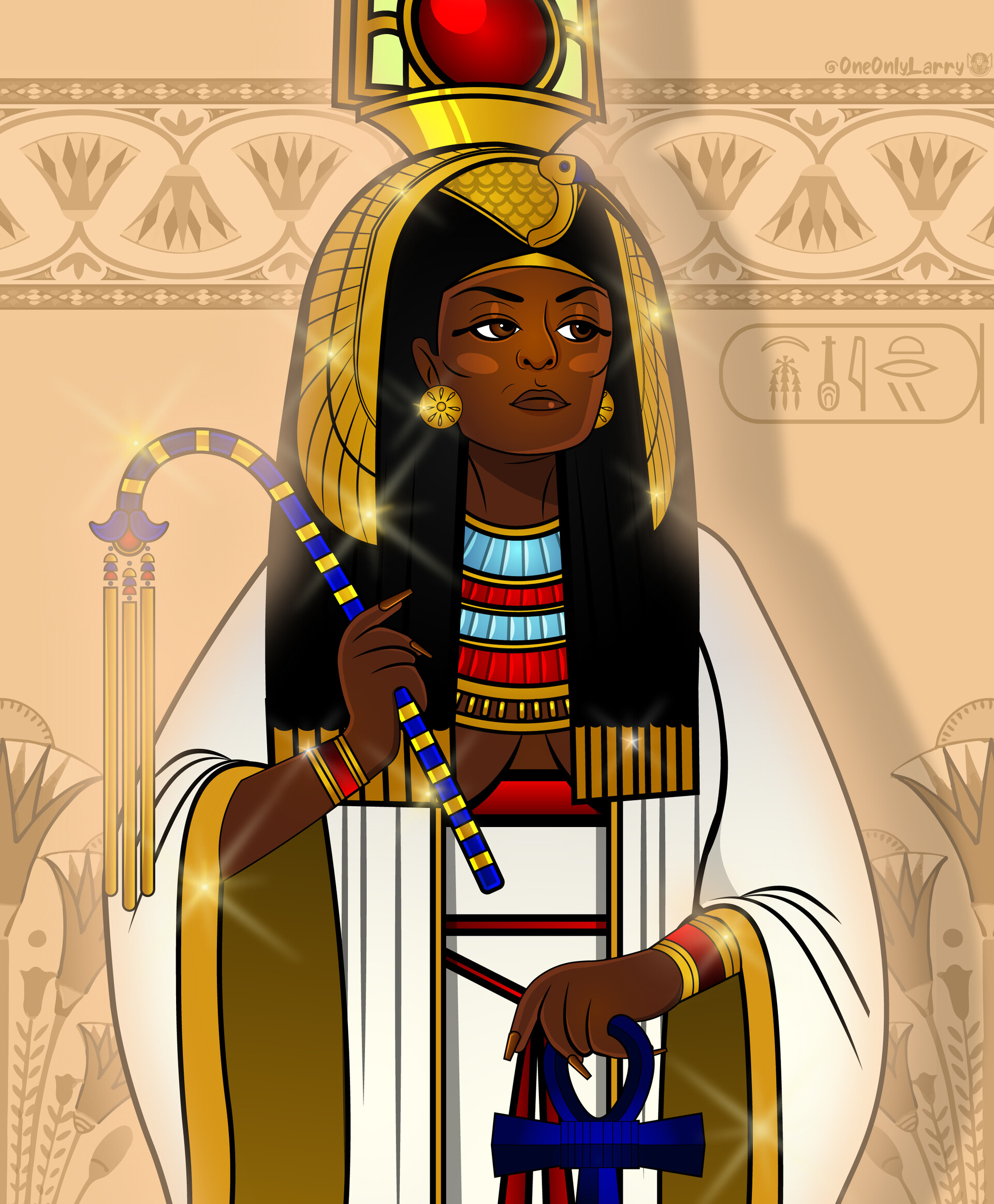
Ahmose Nefertari
Ahmose-Nefertari was an influential queen of ancient Egypt, renowned for her significant contributions during the New Kingdom period, specifically the 18th Dynasty. Born around 1570 BCE, Ahmose-Nefertari belonged to the powerful Theban royal family, as the daughter of Seqenenre Tao II and Ahhotep I.
Her early years were marked by political turbulence as she witnessed the Hyksos invasion and the subsequent efforts of her brother, Ahmose I, to expel these foreign rulers and reunify Egypt. Following the death of her brother, Ahmose-Nefertari married him, becoming his queen. Together, they played pivotal roles in the liberation of Egypt from Hyksos rule, a triumph that marked the beginning of the New Kingdom.
Ahmose-Nefertari is often celebrated for her active participation in the restoration of Egypt's power and glory. As a queen, she supported her husband's military campaigns and diplomatic efforts, securing alliances and fostering stability. Her influence extended beyond traditional roles, and she is believed to have wielded considerable authority.
In addition to her political achievements, Ahmose-Nefertari is noted for her cultural and religious contributions. She was a devoted patron of the arts, encouraging the flourishing of literature, music, and architecture. Temples and monuments were erected in her honor, and her image was immortalized in various artworks.
A woman of intelligence and foresight, Ahmose-Nefertari played a key role in shaping the early years of the New Kingdom. Her legacy endures through the monumental achievements of her reign and her enduring impact on the cultural and political landscape of ancient Egypt. Her death, estimated around 1510 BCE, marked the end of an era, but her memory lived on in the annals of Egyptian history.